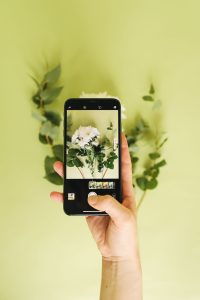
I’ve been thinking about social media and how it relates to the feeling of stuckness in life. We curate our lives through pictures and posts online, connecting others with an image of who we are and what is important to us. These snippets we share can only ever be part of the whole picture though. We are all framing what we want others to see of us, while simultaneously cropping out the mundane or maybe less acceptable parts we would rather hide.
This collective editing of how we present ourselves also reflects and reinforces broader social and cultural expectations, not the least of which are what it means to be successful, put together, and competent. What happens then, when the less picture-worthy parts of ourselves are not lining up with the seemingly immaculate lives we see posted by those around us? How do we make sense of that struggle? Surely, we must be lacking? If we are stuck, we must be the problem, right?
Online, there’s an easy cure for this: an ad or an influencer pops up in our feed offering a new product, a better routine or a fresh mindset that promises to help us feel more together and less stuck. The solution seems simple enough. But what happens when it’s not? What happens when our attempts to fix things simply don’t work, and feeling stuck becomes yet another reason to question ourselves or feel like we’re failing?
Beyond the Promise of Simple Solutions
From a narrative therapy perspective, problems aren’t understood merely as evidence of something lacking within us as individuals. How we see ourselves develops through our experiences, relationships and broader social and cultural environments. It is the meanings we attach to our experiences, the expectations we’re measured against, and the language available to us that can shape the conclusions we come to about ourselves and our difficulties. In this way, the problems in our lives are strongly tied to the stories that we and others tell about us.
Perhaps, then, feeling stuck in life doesn’t always benefit from simplified solutions. What might be more beneficial is approaching this stuckness with a sense of curiosity, so that we might better understand its place in our lives. We might explore what is known and familiar about feeling stuck: What are the expectations we are measuring ourselves against? Where did these expectations come from? What does being stuck say to us about ourselves? And what might it tell us about what matters to us? In exploring these questions, we can begin to understand not only how stuckness has come to occupy space in our lives, but also what might be getting lost or overlooked along the way.
What Curiosity Can Make Possible
But this curiosity also gives us clues about what might be possible moving forward. There may be windows, however small, that light up what is important to us in life. We may find what we are afraid of losing in ourselves when this stuckness shows up. Perhaps we discover a desire for creativity that has been pushed aside by competing responsibilities. Maybe we recognize how much we value connection, independence or a sense of purpose. Or perhaps we begin to see the ways we’ve been trying to meet expectations that don’t really reflect what matters to us. By becoming curious about what we already know and what might have been overlooked, we can begin to develop richer stories about our lives and ones that make room for possibilities that weren’t previously visible.
I am not suggesting here that a person suddenly knows what to do next from these explorations. Rather, I am suggesting that curiosity about the complexities of ourselves and the world we live in might be the better place to start than simply accepting we are lacking. Sometimes developing a richer story doesn’t immediately resolve the difficult circumstances. It can, however, create room for different possibilities, choices and preferred ways of relating to ourselves and our lives.